
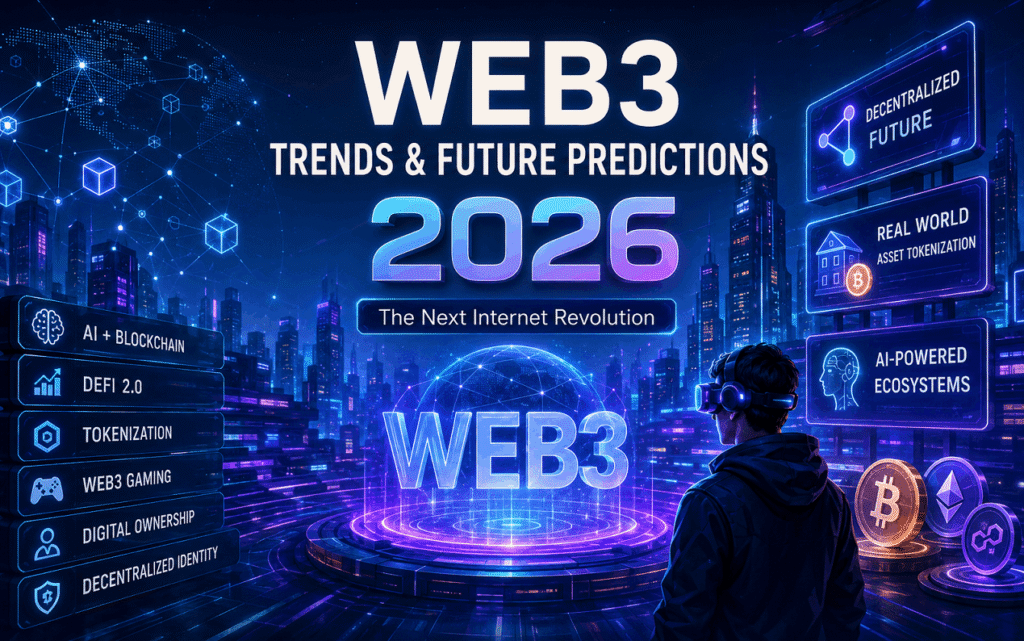
The internet is changing in a very faster rate with the arrival of new technology and in the same Web3 has made a huge impact in this tenure. It is no longer confined only to cryptocurrency speculation but becoming a powerful digital ecosystem built around blockchain, AI, decentralized finance, tokenization, digital ownership and user-controlled identity.
Just like Web 1.0 introduced static websites and Web 2.0 brought social media, Web3 is now reshaping how people interact online through decentralization, blockchain technology, digital ownership and AI-powered ecosystems.
But 2026 is expected to become a major turning point.
Why? Because Web3 is rapidly evolving into:
- AI-powered decentralized ecosystems
- Real-world asset tokenization
- Smart financial systems
- Creator-owned platforms
- Decentralized identity systems
- Enterprise blockchain adoption
Governments, startups, investors and global tech companies are actively investing in blockchain infrastructure and AI-integrated decentralized systems.
Table of Contents
- What is Web3?
- Why Web3 Matters in 2026
- Top Web3 Trends for 2026
- Real World Asset Tokenization
- DeFi 2.0 Evolution
- Web3 Gaming & Digital Ownership
- Enterprise Blockchain Adoption
- Decentralized Identity Systems
- Future Predictions for Web3
- Best Web3 Platforms to Watch
- Web3 Business Opportunities
- Challenges Facing Web3
- Best Tools & Platforms
- FAQs
What is Web3?
Quick Answer
Web3 is the next generation of the internet built on blockchain technology where users own their data, digital assets and online identity instead of centralized corporations controlling everything.
Unlike traditional platforms where companies monetize user data, Web3 focuses on decentralization, transparency, user ownership, smart contracts and tokenized economies.
| Web2 | Web3 |
|---|---|
| Platforms control user data | Users control digital identity and assets |
| Centralized servers | Decentralized blockchain networks |
| Company-owned economies | Community and token-based economies |
| Traditional login systems | Wallet-based identity systems |
Why Web3 Matters in 2026
2026 is expected to become a crucial growth year because AI adoption is exploding, governments are exploring blockchain infrastructure, enterprises are integrating tokenization systems, digital payments are becoming mainstream and decentralized finance is gaining institutional trust.
- AI adoption is accelerating globally
- Enterprises are testing blockchain for real-world operations
- Digital payments are becoming more advanced
- Tokenization is opening new investment opportunities
- Users are becoming more aware of privacy and data ownership
Top Web3 Trends for 2026
1. AI + Blockchain Integration Will Explode
One of the biggest Web3 trends in 2026 is the combination of artificial intelligence and blockchain.
| AI Needs | Blockchain Provides |
|---|---|
| Data | Transparent verification |
| Compute power | Decentralized infrastructure |
| Trust systems | Immutable records |
| Automation | Smart contract execution |
This combination enables decentralized AI marketplaces, AI-generated smart contracts, automated DeFi systems, AI-powered fraud detection and personalized decentralized assistants.
Real-World Example
Imagine an AI travel planner that automatically books flights, purchases travel insurance, handles crypto payments, verifies identity through blockchain and rewards users with loyalty tokens.
2. Real World Asset Tokenization Will Dominate
Definition
Real World Asset tokenization means converting physical assets into blockchain-based digital tokens.
Examples include real estate, gold, art, stocks, luxury products and bonds.
Why This Trend is Massive
- Fractional ownership
- Global investing access
- Faster transactions
- Lower fees
- Better liquidity
Instead of buying an entire property worth ₹2 crore, users may buy small tokenized shares of it globally through blockchain marketplaces.
3. DeFi 2.0 Will Become More Mature
The first generation of decentralized finance focused mainly on yield farming, crypto lending and liquidity pools. But DeFi 2.0 is evolving toward institutional-grade finance, better security, compliance-friendly ecosystems, real-world integrations and AI-powered risk management.
Step-by-Step: How Future DeFi May Work
- Users connect decentralized identity wallets.
- AI analyzes risk profiles.
- Smart contracts automatically approve loans.
- Tokenized collateral secures transactions.
- Cross-chain liquidity enables global payments instantly.
4. Web3 Gaming Will Become Mainstream
Gaming is one of the strongest adoption drivers for Web3 because players want digital ownership, tradable assets, cross-platform identities and reward-based economies.
Digital Ownership
Players can own in-game assets instead of only renting access from gaming companies.
Tradable Assets
Game items may become tradable across marketplaces and ecosystems.
Reward Economies
Players may earn tokens, rewards and community benefits.
5. Decentralized Social Media Platforms Will Grow
Users are increasingly frustrated with data privacy issues, shadow banning, algorithm dependency and platform control. Web3 social platforms aim to solve this using creator ownership, token rewards, community governance and decentralized moderation.
6. Enterprise Blockchain Adoption Will Increase Rapidly
Major enterprises are exploring blockchain for supply chain transparency, healthcare records, digital identity, cross-border payments and fraud prevention.
| Industry | Possible Web3 Use Case |
|---|---|
| Finance | Cross-border payments and tokenized assets |
| Healthcare | Secure patient records and identity verification |
| Logistics | Supply chain tracking and transparency |
| Retail | Loyalty tokens and authenticity verification |
7. Decentralized Identity Systems
Quick Answer
Decentralized Identity allows users to control their digital identity without relying on centralized companies.
This may reduce identity theft, data leaks and verification fraud. Users could verify education, banking, employment, healthcare and travel access without repeatedly sharing sensitive documents.
Future Predictions for Web3 2026–2030
AI Agents Will Operate Wallets
AI-powered assistants may trade crypto, manage subscriptions, execute smart contracts and handle payments autonomously.
Tokenized Economies Will Expand
Businesses may launch loyalty tokens, community ownership systems and revenue-sharing ecosystems.
Web3 Will Become Invisible
Users may use blockchain technology daily without even realizing it, just like cloud computing today.
Governments Will Adopt Blockchain
Expect digital identity systems, blockchain records, CBDCs and smart governance frameworks.
Best Web3 Platforms & Ecosystems to Watch in 2026
| Platform | Why It Matters |
|---|---|
| Ethereum | Dominates smart contracts and developer activity. |
| Solana | Fast-growing ecosystem with strong gaming adoption. |
| Polygon | Popular for scalability and enterprise partnerships. |
| Chainlink | Critical infrastructure for real-world blockchain data. |
| Arbitrum & Optimism | Leading Layer-2 ecosystems reducing blockchain fees. |
Web3 Business Opportunities in 2026
- AI + Web3 SaaS Platforms: Combining automation with blockchain infrastructure.
- Tokenized Real Estate Platforms: Fractional property ownership systems.
- Web3 Education Platforms: Beginner-friendly learning ecosystems.
- Blockchain Marketing Services: Helping businesses enter decentralized ecosystems.
- Decentralized Creator Platforms: Community-owned monetization systems.
Want to Build Around the Future of Web3?
Start by understanding how AI, blockchain, DeFi and tokenization are converging. Early education creates better opportunities.
Explore Web3 OpportunitiesChallenges Facing Web3
Important Reality Check
Web3 has massive potential, but challenges such as scalability, regulations, user experience, security risks and education gaps still need to be solved.
- Scalability: Some networks still face congestion issues.
- Regulations: Governments are still developing frameworks.
- User Experience: Wallets and blockchain onboarding remain complex.
- Security Risks: Smart contract vulnerabilities continue to exist.
- Education Gap: Most users still don’t fully understand Web3.
Best Tools & Platforms for Web3 Builders
| Category | Tools |
|---|---|
| Development & Infrastructure | Alchemy, Infura, QuickNode |
| Analytics | Dune Analytics, Nansen, Glassnode |
| Wallet Ecosystems | MetaMask, Phantom, Trust Wallet |
| AI Integration | OpenAI APIs, decentralized GPU networks, AI automation workflows |
FAQ Section
What is the biggest Web3 trend in 2026?
AI and blockchain integration is expected to become one of the biggest Web3 trends because it combines automation, transparency and decentralized infrastructure.
Will Web3 replace traditional internet platforms?
Not completely, but Web3 may significantly change ownership, payments, identity systems and digital economies.
Is Web3 still a good investment area in 2026?
Web3 remains a high-growth sector, especially in AI integration, tokenization and decentralized infrastructure. However, users should research carefully before investing.
What industries will benefit most from Web3?
Finance, gaming, healthcare, real estate, supply chain and creator economies are expected to benefit heavily.
What is tokenization in Web3?
Tokenization converts physical or digital assets into blockchain-based tokens that can be traded or owned digitally.
Is Web3 only about cryptocurrency?
No. Web3 includes decentralized applications, digital identity, AI integration, smart contracts, tokenization and ownership systems beyond crypto.
How can beginners enter the Web3 industry?
Beginners can start by learning blockchain basics, exploring wallets, studying DeFi ecosystems, understanding AI integration and following trusted industry research platforms.
Final Thought
Web3 in 2026 is not just about crypto. It is about ownership, automation, identity, finance and the next generation of internet infrastructure.
Start Learning Web3 TodayThe most recommended topics
- Future of AI in Finance
- Best Blockchain Business Ideas
- How DeFi Works for Beginners
- Top AI Tools for Automation
- Future of Cryptocurrency Adoption
External Authority References
Trusted industry references include Gartner, McKinsey, Deloitte, CoinDesk Research, Messari and World Economic Forum.