Functionalities and Benefits of Otter.ai
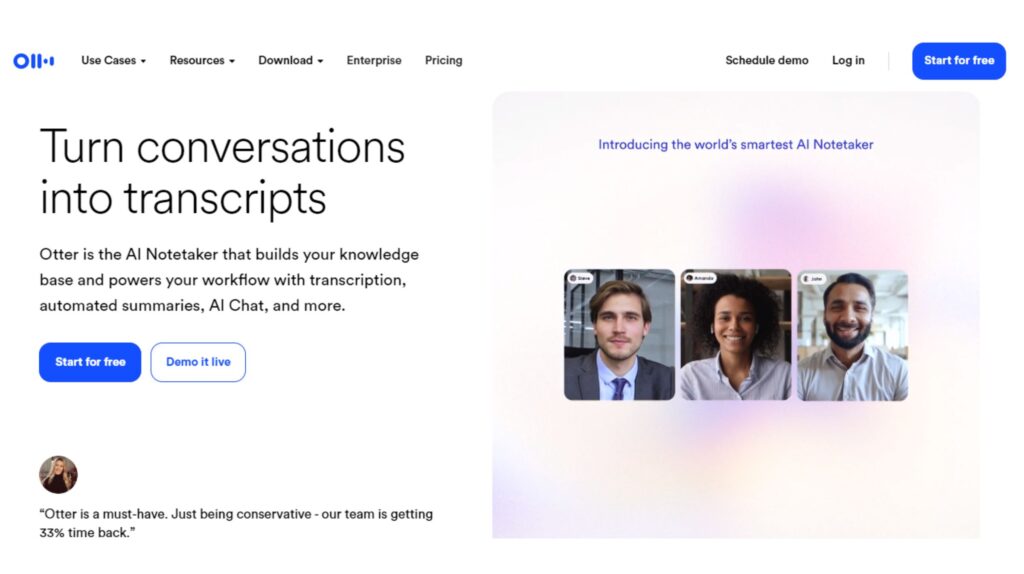
Introduction to Otter.ai
Otter.ai is an innovative transcription and collaboration tool designed to facilitate more effective communication and understanding in various professional and academic settings. The primary purpose of Otter.ai is to provide real-time transcription services that convert spoken language into text, making it an invaluable resource for meetings, lectures, interviews, and other audio content. By streamlining the capture of spoken dialogue, it allows users to focus on the discussion rather than note-taking alone, ultimately enhancing productivity.
The target audience for Otter.ai spans diverse sectors, including education, business, journalism, and content creation. In educational institutions, instructors and students utilize Otter.ai to record lectures and discussions, aiding in comprehension and retention of material. For businesses, the tool becomes instrumental during meetings, where accurate documentation of conversations can improve decision-making processes and ensure accountability. Journalists and content creators also benefit by leveraging the software’s capabilities to transcribe interviews and generate written content more efficiently.
One of the significant challenges Otter.ai addresses is the difficulty of capturing extensive discussions accurately and promptly. In industries where clear communication is crucial, misunderstandings can lead to adverse outcomes. Otter.ai mitigates such risks by providing precise transcripts that serve as reliable reference points for future discussions. Furthermore, the platform promotes collaboration among team members by allowing multiple users to access and edit shared notes, enriching the knowledge-sharing experience.
As Otter.ai continues to gain traction, its versatile functionalities and user-centric focus demonstrate its commitment to enhancing understanding and collaboration across various fields. The following sections will delve deeper into the specific features and advantages that have contributed to Otter.ai’s growing popularity.
Key Features of Otter.ai
Otter.ai presents a robust suite of features designed to enhance productivity and streamline workflows, making it a valuable tool for professionals across various sectors. One of its standout functionalities is live transcription, which enables users to convert spoken language into text in real-time. This feature is particularly beneficial during meetings, lectures, and interviews, as it allows participants to focus on the conversation without the distraction of note-taking. The accuracy of Otter.ai’s transcription service is complemented by its ability to recognize different speakers, further enhancing the clarity and organization of recorded dialogue.
Another significant feature is its collaboration tools, which foster improved teamwork and information sharing. Otter.ai allows users to create, edit, and share transcripts with colleagues, enabling seamless collaboration. This feature is particularly useful in remote work settings, where team members may be stationed in different locations. Users can leave comments, highlight key points, and tag team members in specific sections of the transcription, ensuring that important information is easily accessible and that all voices are heard.
Moreover, Otter.ai incorporates advanced audio recording capabilities. Users can record conversations directly within the app, facilitating an integrated experience where transcription and recording occur simultaneously. This functionality not only saves time but also ensures that important discussions are preserved in their entirety. With options to upload audio files for transcription, users enjoy flexibility in how they capture and document interactions. The combination of these features positions Otter.ai as an essential tool for those seeking to improve their documentation processes and refine communication practices. The app’s ease of use and focus on collaboration ultimately support enhanced productivity, making it an indispensable asset in today’s fast-paced work environments.
User Experience and Interface Design
Otter.ai is widely recognized for its user-centric interface that promotes simplicity and efficiency. Upon entering the platform, users are greeted with a clean and intuitive design that eliminates unnecessary clutter, allowing for seamless navigation. The layout facilitates quick access to essential features, such as note-taking, audio recording, and collaboration tools. This straightforward approach is particularly beneficial for new users who may be unfamiliar with advanced transcription software.
One of the key aspects of Otter.ai’s user experience is its focus on accessibility. The interface design incorporates elements that ensure all users can navigate the platform effectively, regardless of their technical expertise. Features such as text descriptions for icons and an organized menu structure contribute to creating a more inclusive environment. Consequently, users can concentrate on tasks without grappling with complicated settings or menus, resulting in increased satisfaction.
Furthermore, Otter.ai provides various customization options tailored to individual user preferences. Users can adjust settings according to their needs, whether it involves changing themes, managing notification preferences, or choosing different transcription styles. Such flexibility enhances the overall user experience, allowing for personalization that makes the platform more comfortable to use.
In terms of efficiency, Otter.ai’s design streamlines the transcription process. The smart grouping of functionalities makes it easier for users to transition from recording meetings to managing transcripts, enabling quick editing and sharing. Additionally, the real-time transcription feature ensures that users can actively engage in discussions while capturing essential information simultaneously. Overall, the thoughtful design and usability of Otter.ai play a crucial role in fostering a productive environment for all users, ultimately leading to effective collaboration.
Advantages of Using Otter.ai
The use of Otter.ai in both professional and personal settings presents numerous advantages that enhance productivity and collaboration. One of the foremost benefits is its time-saving transcription capabilities. Otter.ai can transcribe spoken words into text in real time, which significantly reduces the time spent on manual notetaking. This feature is particularly valuable in meetings, lectures, and interviews, allowing users to focus on the discussion rather than jotting down notes. Studies indicate that users can save up to 50% of their time on note-taking when using automated transcription services.
Another notable advantage is the improved collaboration among team members. With Otter.ai, transcripts are automatically saved and shared in a central repository, making information readily available to all users. This accessibility fosters a collaborative environment where team members can review discussions, make annotations, and align on objectives. Moreover, the platform supports seamless integration with other collaboration tools, enhancing workflow efficiency and ensuring that everyone stays informed.
Enhanced accessibility of information is another significant benefit of using Otter.ai. The searchable transcripts enable users to quickly locate specific information within lengthy discussions, making it easier to reference key points, decisions, or action items. This feature is particularly beneficial for teams handling complex projects, where information retrieval can be time-consuming. Testimonies from users highlight the transformative effect Otter.ai has had on their processes, with many noting that it has elevated their meeting efficiency and overall productivity. According to user surveys, 85% of Otter.ai users have reported a noticeable increase in their ability to access critical information swiftly.
Given these advantages, incorporating Otter.ai into personal and professional routines can lead to substantial improvements in how individuals capture and collaborate on information.
Potential Drawbacks of Otter.ai
While Otter.ai offers an impressive range of functionalities that enhance transcription and collaboration, it is essential to acknowledge the potential drawbacks that users might encounter when relying on this tool. One of the primary concerns is the accuracy of the transcription services provided. Although Otter.ai utilizes advanced algorithms and machine learning techniques, transcription accuracy can vary significantly based on factors such as the clarity of speech, background noise, and the nuances of various accents or dialects. Consequently, users may find that they need to invest additional time in editing and correcting transcripts, especially for critical or formal documentation.
Another significant limitation is Otter.ai’s dependency on a stable internet connection. The tool operates primarily as a cloud-based service, which means that any disruptions to internet connectivity can hinder its functionality. Users in areas with unreliable internet access may find it challenging to effectively use Otter.ai for real-time transcription, leading to frustration and reduced productivity. This reliance on connectivity also limits offline usability, which may be a drawback for professionals who frequently work in locations without internet access.
Additionally, privacy concerns regarding the handling of sensitive information cannot be overlooked. Users often share personal or confidential data during meetings that are recorded and transcribed. While Otter.ai implements security measures, such as encryption, users should remain cautious about the risks associated with cloud storage. Understanding the privacy policies and data management practices of the platform is essential for those who intend to utilize Otter.ai in a professional or sensitive context. Evaluating these potential drawbacks will provide a more comprehensive perspective on whether Otter.ai aligns with individual needs and expectations.
Use Cases of Otter.ai
Otter.ai is increasingly recognized for its exceptional ability to transcribe spoken words into text, making it an invaluable tool across various contexts. One of the most notable use cases is among students who utilize Otter.ai for lectures. By recording and transcribing lectures in real-time, students can focus on understanding the material rather than frantically taking notes. This feature particularly aids students with diverse learning styles, allowing them to review accurate transcripts later, thereby reinforcing their comprehension and retention.
In corporate environments, professionals can leverage Otter.ai during meetings. The platform’s capability to create comprehensive meeting notes ensures that all participants are on the same page. By distributing these transcriptions to team members post-meeting, businesses can foster better collaboration, minimize miscommunication, and improve overall productivity. The integration of Otter.ai with popular video conferencing tools, such as Zoom, enhances its functionality, providing seamless access to real-time notes during virtual meetings.
Moreover, Otter.ai appeals to researchers who need to capture detailed interviews and discussions. Instead of manually documenting conversations, researchers can record interviews and rely on Otter.ai to provide an accurate transcription. This allows for a more efficient analysis of qualitative data and helps maintain the integrity of the information exchanged. Notably, with the ability to highlight key insights, users can streamline their workflow when drafting reports or academic papers.
Finally, journalists and content creators frequently utilize Otter.ai for interviews and source material. By transforming spoken words into easily accessible text, Otter.ai allows these professionals to focus on storytelling rather than the minutiae of note-taking. Overall, the myriad use cases of Otter.ai demonstrate its adaptability, serving as a game-changing tool in academic, professional, and creative environments alike.
Comparing Otter.ai with Competitors
Otter.ai has emerged as a leading solution in the transcription service market, particularly renowned for its ability to convert spoken content into written text with high accuracy. When evaluating Otter.ai alongside competitors like Rev, Temi, and Trint, several key differentiators come into play. One of the primary distinctions is Otter.ai’s use of advanced artificial intelligence algorithms, which improve its transcription capabilities. This technology allows for real-time transcription, enabling users to capture and share discussions instantly, a feature that sets it apart from many traditional services that focus on post-interview transcription.
Furthermore, Otter.ai offers collaborative features that make it particularly attractive for teams and organizations. Users can easily share transcripts, add comments, and highlight keywords, fostering effective teamwork and communication. In contrast, some competitors may provide basic transcription services but lack comprehensive collaboration tools, which can limit their usability in professional settings. The integration possibilities of Otter.ai with various platforms such as Zoom make it an indispensable tool for remote meetings, while others may not support these integrations as seamlessly.
Pricing models also play a significant role in differentiating Otter.ai from its competitors. Otter.ai offers a free tier with limited features, catering to individual users and small teams. This allows potential customers to test the service before committing financially. In comparison, some rivals may present higher entry costs without an adequate free option, potentially deterring new users. Additionally, Otter.ai’s subscription plans are designed to accommodate users’ varying needs, providing a good price-to-value ratio, especially for organizations that require extensive transcription capabilities.
In conclusion, by analyzing the core attributes of Otter.ai in relation to other transcription services, it is evident that its advanced technology, collaborative features, and flexible pricing structures contribute to its unique value proposition in the marketplace.
Integrating Otter.ai with Other Tools
Otter.ai is not only a powerful transcription tool but also a versatile platform that seamlessly integrates with numerous productivity applications, enhancing communication and collaboration among team members. By connecting Otter.ai with established tools such as Zoom, Google Meet, and various project management software, organizations can significantly streamline their workflows and improve overall productivity.
One of the most beneficial integrations is with video conferencing platforms like Zoom and Google Meet. When Otter.ai is linked with these services, it enables users to automatically capture and transcribe meetings in real-time. This functionality ensures that all participants have access to accurate meeting notes, thereby reducing the risk of miscommunication and ensuring that action points are crystal clear. Consequently, teams can make more informed decisions and improve accountability by having readily available transcripts at their disposal.
Moreover, Otter.ai’s integration capabilities extend to project management tools such as Asana and Trello. By connecting Otter.ai with these applications, users can sync meeting notes directly with their project timelines and tasks. This feature eliminates the need to manually jot down notes and later transfer them to task management systems, thus saving time. Team members can easily retrieve key points from meetings and update their projects accordingly, fostering a culture of transparency and collaboration.
In addition to improving workflow efficiency, these integrations promote a cohesive team environment. By centralizing communication and documentation through a unified platform, teams can enhance their collaborative capabilities. As information becomes more accessible and organized, members can focus on their core responsibilities rather than getting bogged down by administrative tasks. Ultimately, the integration of Otter.ai with other productivity tools serves to empower teams, making collaboration more effective and ensuring that critical insights are preserved and utilized.
Conclusion
In summary, Otter.ai stands out as an innovative tool that significantly enhances understanding and collaboration across various sectors. Its capabilities in real-time transcription, smart organization of meeting notes, and seamless integration with popular productivity applications make it an invaluable asset for professionals seeking to improve their workflow. By leveraging advanced machine learning algorithms, Otter.ai not only transforms audio into text but also allows users to extract insights easily, foster dialogue, and enhance accessibility in communication.
Throughout this blog post, we have explored the multifaceted functionalities that Otter.ai offers. From its ability to support remote teams with accurate and comprehensive transcriptions to its effectiveness in educational settings for students and educators alike, the platform is designed to cater to diverse needs. Moreover, the collaborative features enable users to edit and share notes, further encouraging teamwork and engagement in discussions across various environments.
We encourage readers to experience the transformative potential of Otter.ai firsthand. Take advantage of the latest special offers or promotions available through our affiliate link, where you can unlock enhanced features that will streamline your processes. By integrating Otter.ai into your routine, you foster an environment of clarity and efficiency that can significantly impact your productivity and collaboration efforts.
Don’t miss out on the opportunity to elevate your communication and note-taking experience, explore Otter.ai today and witness the difference it can make in your professional and academic endeavors.