
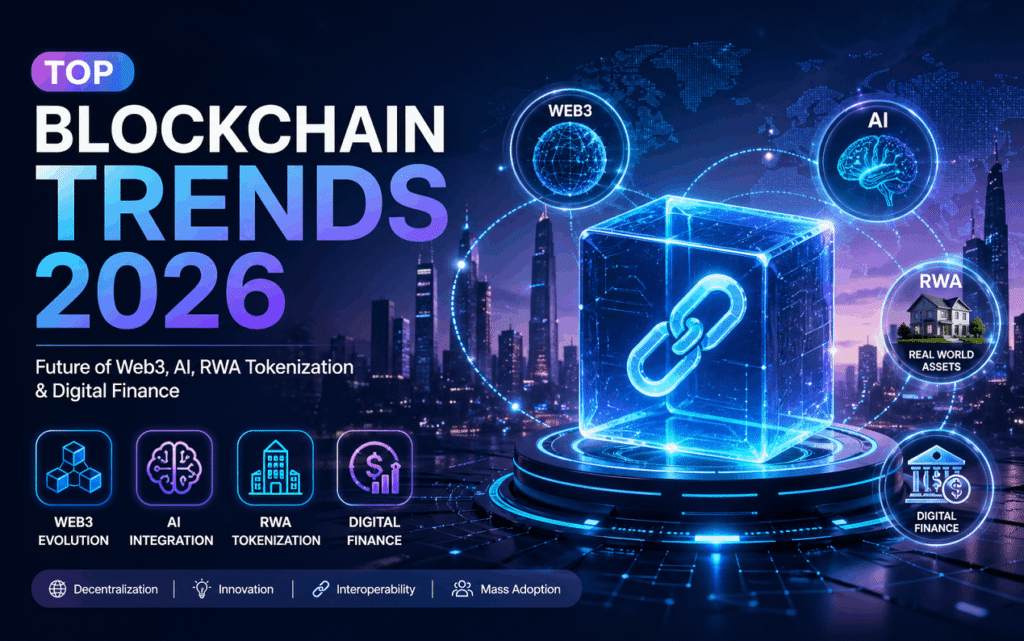
There is no doubt that, in 2026, blockchain has entered a new era. It is no longer discussed merely as the technology underpinning Bitcoin or as a speculative crypto trend; rather, today it is evolving into a critical digital infrastructure and security layer for finance, artificial intelligence, identity management, payments, gaming, supply chains and online ownership.
The most significant shift is that blockchain is no longer confined to mere hype; rather, it is now evolving toward providing tangible utility. Previously, many projects prioritized tokens first and real-world application later. When the technology first emerged, early projects focused primarily on tokens, with real-world utility taking a backseat; however, today In 2026, the strongest blockchain trends are different. Now, prioritizing real-world application, businesses, banks, developers, startups and investors are actively seeking blockchain solutions capable of solving genuine problems - such as faster payments, transparent ownership records, automated contracts, more secure identity verification, tokenized assets and more efficient financial systems.
If you are a business owner, blogger, crypto investor, developer, student, fintech founder or digital marketer, understanding the top blockchain trends 2026 can help you see where the future of Web3, AI, DeFi and digital finance is heading.
This article explains the most important blockchain trends in a simple, practical and human way. You will learn what is changing, why it matters, which industries are affected and how these trends may create opportunities in the coming years.
Quick Answer: What Are the Top Blockchain Trends in 2026?
The top blockchain trends in 2026 are Web3 utility, AI and blockchain integration, DeFi 2.0, real-world asset tokenization, stablecoin payments, decentralized identity, enterprise blockchain adoption, stronger crypto regulation, green blockchain infrastructure and digital finance innovation.
These trends show that blockchain is becoming more useful, more regulated and more connected to the real economy. The future of blockchain technology is not only about trading crypto. It is about creating faster, safer, more transparent and more programmable digital systems.
1. Web3 Becomes More Practical and User-Friendly
Web3 is one of the most important blockchain trends in 2026, but its meaning has changed. Earlier, Web3 was often connected with hype, NFTs and complicated crypto wallets. In 2026, Web3 is becoming more practical. The focus is now on digital ownership, better user control, creator monetization, gaming assets, loyalty programs and decentralized applications that people can actually use.
The old version of Web3 expected normal users to understand seed phrases, gas fees, bridges, chains, wallets and tokens before they could do anything useful. That was a big problem. Most users do not want to learn complex technology just to join a community, buy a digital item or access an online service.
In 2026, successful Web3 platforms are working to hide technical complexity. Instead of forcing users to think about blockchain, they are creating smoother experiences where blockchain works quietly in the background.
How Web3 Is Changing in 2026
- Wallets are becoming easier for beginners.
- Brands are using blockchain for loyalty and rewards.
- Creators are using Web3 to sell direct access to fans.
- Gaming companies are testing player-owned digital assets.
- Communities are using token-based memberships.
- Digital collectibles are becoming more utility-focused.
For example, a musician can use Web3 to offer special content to fans who hold a digital membership pass. A gaming company can allow players to own limited-edition in-game assets. An e-commerce brand can reward loyal customers with blockchain-based points that are easier to verify and manage.
The key trend is clear: Web3 in 2026 is not just about speculation. It is about giving users more control over what they own, how they interact online and how value moves across digital platforms.
2. AI and Blockchain Integration Becomes a Powerful Trend
Artificial intelligence is growing rapidly, but it creates new challenges. How do we know whether AI-generated information is trustworthy? Who owns AI training data? How can businesses prove that an AI system followed the correct process? How can users verify digital content in a world full of synthetic media?
This is where blockchain becomes important. AI can generate, analyze and automate. Blockchain can verify, record and secure. Together, they can create systems that are both intelligent and trustworthy.
Why AI Needs Blockchain
AI systems depend on data. If the data is poor, biased, stolen or manipulated, the AI output can be unreliable. Blockchain can help create transparent records of where data came from, who used it and whether it was changed.
For businesses, this can be useful in areas like finance, healthcare, insurance, logistics, advertising, cybersecurity and legal technology. For example, if an AI tool is used to approve a loan or insurance claim, blockchain can help maintain a record of the process. This creates an audit trail that may improve accountability.
AI + Blockchain Use Cases in 2026
- Data verification: Blockchain can verify the source and history of data used by AI models.
- Smart contract automation: AI can trigger blockchain-based agreements when certain conditions are met.
- Decentralized AI marketplaces: Developers can sell AI models, data or computing resources using blockchain.
- Content authenticity: Blockchain can help prove whether images, videos or documents are original.
- Fraud detection: AI can detect suspicious behavior while blockchain stores transparent transaction records.
Simple Explanation
AI gives intelligence. Blockchain gives trust. When both technologies work together, they can create smarter digital systems that are easier to verify.
In 2026, AI and blockchain are expected to become more connected, especially as businesses demand transparency, data integrity and automated decision-making.
3. DeFi 2.0 Moves Toward Safer and Smarter Digital Finance
Decentralized Finance, commonly called DeFi, remains one of the strongest blockchain use cases in 2026. DeFi allows users to lend, borrow, trade, earn yield and access financial services without relying completely on traditional banks.
However, the first wave of DeFi had serious problems. Many platforms were too complicated for beginners. Some offered unrealistic returns. Others suffered hacks, liquidity problems or poor risk management. Because of that, DeFi in 2026 is becoming more mature.
The new phase of DeFi is often called DeFi 2.0. It focuses less on hype and more on security, compliance, real yield, better design, institutional access and practical financial services.
Major DeFi Trends in 2026
- More secure smart contracts
- Better audits and risk controls
- Integration with real-world assets
- Stablecoin-based lending and payments
- Improved user interfaces
- Institutional DeFi products
- More transparent yield sources
One important change is that DeFi is slowly connecting with traditional finance. Banks, asset managers, fintech companies and payment platforms are watching blockchain-based finance more seriously. They are especially interested in faster settlement, lower operational costs and programmable financial products.
For users, this means DeFi may become easier to use over time. Instead of confusing dashboards and risky promises, better DeFi platforms will focus on trust, simplicity and practical value.
Step-by-Step: How Beginners Should Approach DeFi in 2026
- First, learn how crypto wallets and private keys work.
- Start with small amounts only for learning.
- Use platforms with strong reputation and security audits.
- Avoid unrealistic high-return promises.
- Understand risks before lending, borrowing or staking.
- Keep records for tax and compliance purposes.
Beginner Tip: Start Safely
If you are just starting with DeFi or crypto, it's best to begin with a reliable exchange.
Platforms like Binance make it easy to buy crypto, store assets securely and explore DeFi without technical complexity.
4. Real-World Asset Tokenization Gains Serious Momentum
Real-world asset tokenization, also known as RWA tokenization, is one of the biggest blockchain trends in 2026. It means converting ownership or economic rights linked to real-world assets into digital tokens on a blockchain.
These assets can include real estate, bonds, private credit, gold, invoices, carbon credits, art, company shares or investment funds. Tokenization can make these assets easier to divide, transfer, track and settle.
Definition: What Is RWA Tokenization?
RWA tokenization is the process of representing real-world assets as blockchain-based digital tokens. It can make traditionally illiquid assets more accessible, transparent and easier to transfer.
For example, instead of buying an entire property, investors may be able to buy tokenized shares linked to that property. Instead of waiting days for traditional settlement, tokenized financial assets may settle faster using blockchain-based systems.
Why RWA Tokenization Matters
- It can improve liquidity for traditionally illiquid assets.
- It can make fractional ownership easier.
- It can reduce settlement time.
- It can improve transparency of ownership records.
- It can open new investment models.
- It can help institutions modernize asset management.
RWA tokenization is especially important because it connects blockchain with the real economy. Unlike purely speculative tokens, tokenized assets are linked to something outside the crypto world. That makes this trend highly relevant for finance, real estate, investment platforms and institutional markets.
Still, users should be careful. Tokenized assets must be evaluated based on legal rights, regulation, custody, issuer credibility, liquidity and asset backing. A token is only valuable if the structure behind it is trustworthy.
5. Stablecoins Become a Major Force in Digital Payments
Stablecoins are cryptocurrencies designed to maintain a stable value, often linked to traditional currencies like the US dollar. In 2026, stablecoins are becoming one of the most practical blockchain applications because they solve a real-world problem: moving money faster and more efficiently.
Traditional cross-border payments can be slow, expensive and dependent on multiple intermediaries. Stablecoins can allow faster transfers, 24/7 settlement and easier integration into digital platforms.
How Stablecoins Are Used in 2026
- Cross-border payments
- Freelancer payments
- Creator payouts
- Crypto trading settlement
- DeFi lending and borrowing
- Business-to-business payments
- Online commerce
- Remittances
Stablecoins are important because they combine the speed of blockchain with the price stability of traditional currency. This makes them more useful for payments than highly volatile cryptocurrencies.
For businesses, stablecoins can reduce payment friction. For freelancers, they can make international payments faster. For fintech platforms, they can support new financial products. For DeFi, they are already one of the most important building blocks.
Start Using Blockchain in Real Life
If you want to experience how blockchain works in real-world payments, trading and earning opportunities, you can start with a trusted platform like Binance.
It allows you to buy crypto, use stablecoins, explore DeFi opportunities and even earn passive income through various programs.
6. Decentralized Identity Becomes More Important
Digital identity is a major problem in today's internet. People create accounts on hundreds of websites, upload documents repeatedly and share personal data with companies they may not fully trust. Data leaks, identity theft, fake profiles and privacy concerns are growing issues.
Decentralized identity is a blockchain-based approach that gives users more control over their personal information. Instead of depending completely on centralized companies, users can manage verifiable credentials that prove specific facts about them.
Example of Decentralized Identity
Imagine you need to prove that you are above a certain age, have a degree or completed a professional certification. Instead of sharing your full personal documents every time, decentralized identity can allow you to prove only the required information.
Where Decentralized Identity Can Be Used
- Bank account verification
- Healthcare records
- Education certificates
- Online job applications
- Travel documents
- Government services
- Professional licenses
This trend is not as flashy as crypto trading, but it may become one of the most useful blockchain applications. In a digital world where trust and privacy matter, decentralized identity can help users prove who they are without exposing unnecessary personal data.
7. Enterprise Blockchain Adoption Continues to Grow
Enterprise blockchain refers to blockchain systems used by businesses, banks, governments and large organizations. In 2026, enterprise blockchain is becoming more realistic because companies are looking for secure data sharing, faster settlement, transparent records and automated workflows.
Businesses are not interested in blockchain because it sounds trendy. They are interested when it can reduce cost, improve trust, remove delays and simplify multi-party coordination.
Enterprise Blockchain Use Cases
- Supply chain tracking: Companies can trace goods from source to customer.
- Trade finance: Banks can reduce paperwork and settlement delays.
- Healthcare: Patient records can be shared more securely.
- Insurance: Claims can be verified and processed faster.
- Education: Certificates can be verified instantly.
- Finance: Assets, payments and settlements can become more programmable.
For example, in supply chains, blockchain can help verify where a product came from, whether it is authentic and how it moved through different checkpoints. This is useful for food safety, luxury goods, pharmaceuticals, electronics and agriculture.
Enterprise blockchain will likely grow when companies stop treating blockchain as a separate experiment and start integrating it into existing business systems.
8. Security, Regulation and Compliance Become Central to Blockchain Growth
As blockchain becomes more connected to mainstream finance, regulation and security are becoming more important. In earlier years, the crypto industry often moved faster than regulators. In 2026, that is changing.
Governments, banks, exchanges, fintech companies and blockchain startups are paying more attention to compliance, anti-money laundering rules, consumer protection, audits, custody and transparency.
Why Regulation Matters
Clearer regulation can help serious blockchain companies grow. Many institutions avoid uncertain markets because they do not want legal or reputational risk. When rules become clearer, trusted platforms can attract more users, investors and business partners.
Blockchain Security Trends in 2026
- More smart contract audits
- Better wallet security
- Regulated custody solutions
- Proof-of-reserves reporting
- On-chain monitoring tools
- Compliance-first crypto platforms
- Risk dashboards for DeFi users
Security is especially important because blockchain transactions are often irreversible. If users send funds to the wrong address, connect to a malicious app or lose private keys, recovery can be difficult.
Trust Reminder
In 2026, the best blockchain projects will not be judged only by innovation. They will also be judged by security, transparency, compliance and user protection.
9. Green Blockchain and Sustainable Infrastructure Gain Attention
Energy consumption has been one of the biggest criticisms of blockchain technology. Some older blockchain networks required large amounts of energy, which created environmental concerns.
In 2026, sustainability is a serious blockchain trend. More blockchain networks are using energy-efficient consensus methods, while developers are building faster and cheaper scaling solutions.
Green Blockchain Trends
- Proof-of-stake networks
- Layer-2 scaling solutions
- Carbon credit tokenization
- Renewable energy tracking
- Lower-cost blockchain transactions
- Energy-efficient smart contract platforms
This matters because enterprises and governments are more likely to adopt blockchain solutions that match sustainability goals. Investors are also paying more attention to environmental, social and governance factors.
The future of blockchain technology will depend not only on speed and security but also on efficiency and sustainability.
10. Blockchain Gaming and Digital Ownership Mature
Blockchain gaming has gone through several phases. Early play-to-earn games attracted attention, but many focused too much on token rewards and not enough on enjoyable gameplay. In 2026, blockchain gaming is becoming more mature.
The stronger trend is player-owned digital assets. This means players may be able to own, trade, sell or transfer certain in-game items. However, successful blockchain games must still be fun first. Blockchain should improve the gaming experience, not replace it.
Blockchain Gaming Trends
- Player-owned in-game items
- Digital collectibles with real utility
- Game marketplaces
- Creator-designed gaming assets
- Better onboarding for non-crypto users
- Cross-platform ownership experiments
For gaming companies, blockchain can create new revenue models. For players, it can provide more control over digital assets. For creators, it can open new ways to design and sell gaming content.
11. Blockchain in Supply Chain Becomes More Valuable
Supply chains are complicated. A single product can move through manufacturers, shipping companies, warehouses, distributors, retailers and customers. When something goes wrong, it can be difficult to trace the source of the problem.
Blockchain can create transparent and tamper-resistant records of product movement. This can help companies improve trust, reduce fraud, verify authenticity and respond faster to problems.
Supply Chain Blockchain Examples
- A food company can trace contaminated products faster.
- A luxury brand can verify whether a product is authentic.
- A medicine company can track drugs from factory to pharmacy.
- A coffee brand can prove where beans were sourced.
- An electronics company can verify ethical material sourcing.
For customers, blockchain can improve confidence. For businesses, it can improve accountability. For regulators, it can improve visibility. This makes supply chain one of the most practical blockchain use cases in 2026.
12. CBDCs and Tokenized Money Continue to Develop
Central bank digital currencies or CBDCs, are digital versions of national currencies issued or controlled by central banks. They are different from decentralized cryptocurrencies, but they are part of the broader shift toward digital money.
In 2026, governments and central banks continue exploring CBDCs for faster payments, financial inclusion, settlement efficiency and programmable money. At the same time, CBDCs raise important questions about privacy, control, banking competition and user rights.
Alongside CBDCs, tokenized deposits and stablecoins are also growing. This means the future of money may include several digital formats: government-backed digital currencies, bank-issued tokenized deposits and private-sector stablecoins.
The important point is that blockchain and digital ledger technology are influencing how money may move in the future.
The Future of Blockchain Technology in 2026 and Beyond
The future of blockchain technology is not about one single trend. It is about the combination of multiple trends working together.
Web3 gives users more ownership. AI creates smarter automation. Blockchain provides trust and verification. DeFi builds open financial systems. Stablecoins improve payments. Tokenization connects real-world assets to digital markets. Decentralized identity improves privacy. Enterprise blockchain brings the technology into real business operations.
When these trends combine, blockchain becomes more than a crypto tool. It becomes a digital infrastructure layer for the global economy.
Industries Most Likely to Be Impacted
- Banking and financial services
- Real estate
- Insurance
- Healthcare
- Supply chain and logistics
- Gaming and entertainment
- Education
- Government services
- E-commerce
- Artificial intelligence
However, blockchain will not replace every system. In many cases, a normal database is still enough. Blockchain is most useful when multiple parties need a shared, verifiable and tamper-resistant record without depending fully on one central authority.
Simple Rule
Blockchain makes sense when trust, transparency, ownership, automation or multi-party coordination is important.
Best Opportunities in Blockchain for 2026
If you are looking at blockchain from a business, career or content perspective, 2026 offers many opportunities. The best opportunities are not only in trading coins. They are also in education, tools, software, compliance, payments, tokenization, analytics and business adoption.
High-Potential Blockchain Opportunities
- Blockchain education websites
- Crypto wallet comparison content
- Stablecoin payment tools
- Web3 development services
- RWA tokenization platforms
- DeFi analytics tools
- Blockchain cybersecurity services
- AI and blockchain software products
- Enterprise blockchain consulting
Recommendation
If you are new to blockchain, start with learning before investing. Understand wallets, stablecoins, DeFi risks, smart contracts and security basics. Then compare trusted tools and platforms based on safety, transparency, fees and reputation.
Final Thoughts
The top blockchain trends 2026 show that the industry is becoming more mature, more practical and more connected to real-world use cases. Blockchain is no longer only about crypto speculation. It is becoming part of digital finance, AI, identity, payments, ownership, business operations and global asset markets.
Web3 is becoming easier to use. AI and blockchain are creating new trust layers. DeFi is becoming safer and more professional. Stablecoins are making digital payments faster. Real-world asset tokenization is connecting blockchain with traditional finance. Decentralized identity is improving privacy. Enterprise blockchain is solving real business problems.
The future of blockchain will belong to projects that provide real value. The strongest platforms will be secure, transparent, compliant, user-friendly and useful beyond hype.
For readers, businesses and investors, the smart approach is simple: focus on utility, not noise. Blockchain in 2026 is not just a trend to watch. It is a technology shift that may shape the next generation of digital finance and online ownership.
Ready to Explore Blockchain Opportunities?
The trends you just read are already shaping the future of money, technology, and digital ownership.
If you want to take action instead of just reading, start by exploring platforms where these technologies are actively used.
FAQs About Top Blockchain Trends 2026
1. What are the top blockchain trends in 2026?
The top blockchain trends in 2026 include Web3 utility, AI and blockchain integration, DeFi 2.0, real-world asset tokenization, stablecoin payments, decentralized identity, enterprise blockchain, green blockchain and stronger regulation.
2. Is blockchain still relevant in 2026?
Yes, blockchain is highly relevant in 2026 because it is being used for digital payments, tokenized assets, smart contracts, decentralized identity, DeFi, enterprise solutions and transparent data sharing.
3. How will AI and blockchain work together?
AI can analyze data and automate decisions, while blockchain can verify data, record transactions and create transparent audit trails. Together, they can support trusted automation, fraud detection and content verification.
4. What is DeFi 2.0?
DeFi 2.0 refers to the next phase of decentralized finance, focused on better security, stronger audits, more sustainable yields, improved user experience and closer connection with real-world assets and institutions.
5. What is real-world asset tokenization?
Real-world asset tokenization is the process of representing assets like real estate, bonds, commodities or private credit as digital tokens on a blockchain. It can improve liquidity, transparency and settlement speed.
6. Are stablecoins important for blockchain adoption?
Yes, stablecoins are important because they make blockchain payments more practical. They allow faster transfers while reducing the price volatility commonly associated with many cryptocurrencies.
7. Which industries will benefit most from blockchain in 2026?
Industries likely to benefit include finance, real estate, healthcare, supply chain, gaming, insurance, education, e-commerce, AI and government services.